

Visitor badges play a foundational role in establishing clear identity within a workplace, ensuring that every non-employee present can be immediately recognized. In modern offices where open layouts and shared spaces are common, it can be difficult to distinguish between staff, contractors, and visitors at a glance. A visible badge displaying a name, photo, company, and visit purpose removes ambiguity and creates instant clarity. This clarity helps employees feel confident about who belongs in the space and who may need assistance or verification.
Beyond identification, visitor badges introduce a strong sense of accountability for everyone entering the premises. When visitors know they are visibly identified, they are more likely to respect workplace rules and remain within authorized areas. This subtle psychological effect encourages responsible behavior without the need for constant supervision. Accountability also protects the organization by ensuring that every visitor’s presence is documented and traceable if questions arise later.
Clear identity and accountability benefit employees as much as visitors. Staff members can quickly determine whether someone needs guidance, escorting, or further verification, reducing hesitation and uncertainty. This improves daily interactions while reinforcing a culture of awareness and shared responsibility. Over time, consistent use of visitor badges builds trust and predictability within the workplace, which is essential for maintaining a safe and professional environment.
How Visitor Badges Help Prevent Unauthorized Access
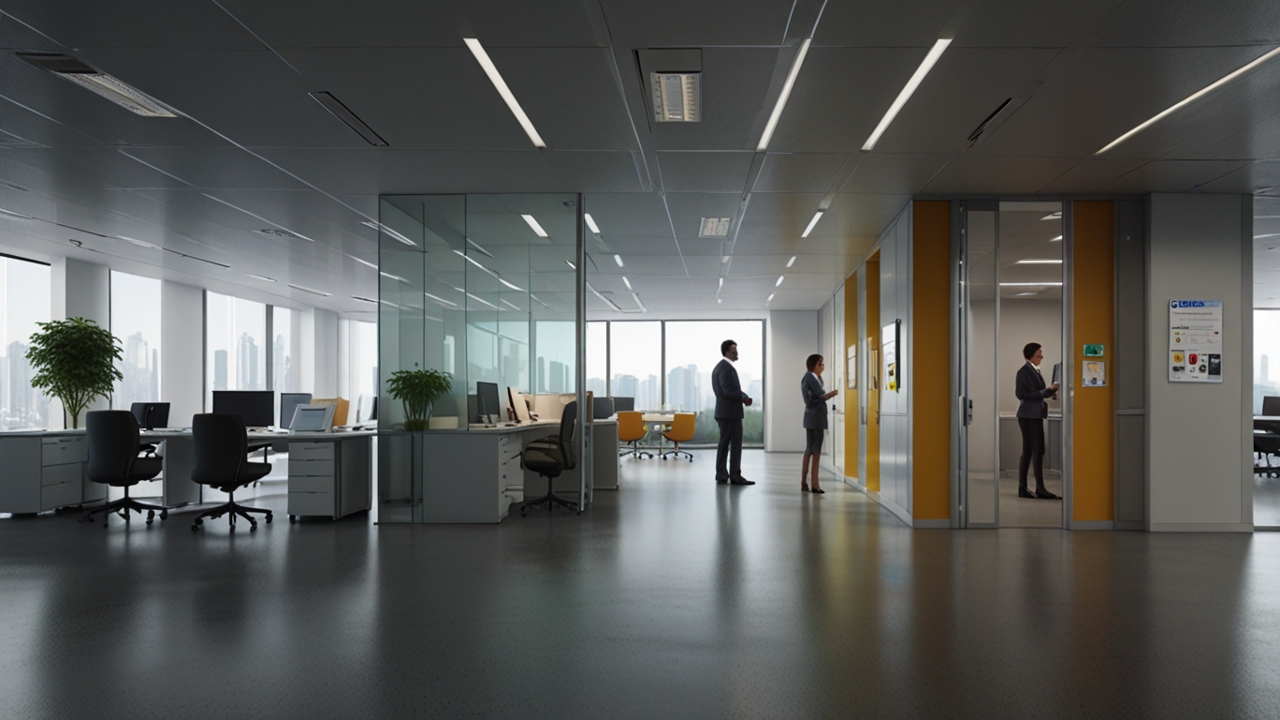
Unauthorized access is one of the most common security risks in any workplace, particularly in buildings with high foot traffic. Visitor badges act as a simple but highly effective barrier against this risk by making unauthorized individuals stand out immediately. When everyone on-site is expected to display a badge, anyone without one becomes noticeable, prompting quick verification. This visual control reduces the chance of tailgating or accidental access to restricted areas.
Badges can also be designed to limit access through color coding, expiration times, or access-level indicators. For example, a badge may clearly show which floors or departments a visitor is allowed to enter. This reduces reliance on verbal instructions alone, which can be forgotten or misunderstood. Employees can instantly identify whether a visitor is in the correct area, preventing accidental breaches of sensitive zones.
Preventing unauthorized access is not only about security but also about protecting information, equipment, and people. Areas such as data centers, executive offices, and production floors often contain valuable or sensitive assets. Visitor badges help enforce boundaries without creating a hostile or overly restrictive atmosphere. The result is a balanced approach where security is visible, effective, and integrated seamlessly into everyday operations.
How Visitor Badges Support Emergency Response and Evacuation

Unauthorized access is one of the most common security risks in any workplace, particularly in buildings with high foot traffic. Visitor badges act as a simple but highly effective barrier against this risk by making unauthorized individuals stand out immediately. When everyone on-site is expected to display a badge, anyone without one becomes noticeable, prompting quick verification. This visual control reduces the chance of tailgating or accidental access to restricted areas.
Badges can also be designed to limit access through color coding, expiration times, or access-level indicators. For example, a badge may clearly show which floors or departments a visitor is allowed to enter. This reduces reliance on verbal instructions alone, which can be forgotten or misunderstood. Employees can instantly identify whether a visitor is in the correct area, preventing accidental breaches of sensitive zones.
Preventing unauthorized access is not only about security but also about protecting information, equipment, and people. Areas such as data centers, executive offices, and production floors often contain valuable or sensitive assets. Visitor badges help enforce boundaries without creating a hostile or overly restrictive atmosphere. The result is a balanced approach where security is visible, effective, and integrated seamlessly into everyday operations.
How Visitor Badges Support Emergency Response and Evacuatio

In emergency situations, such as fire alarms or building evacuations, knowing who is inside the building is critical. Visitor badges contribute directly to faster and more accurate emergency response by identifying non-employees who may not be familiar with evacuation procedures. Emergency teams and floor marshals can quickly spot visitors and provide guidance or assistance as needed. This reduces confusion and ensures that no one is overlooked during critical moments.
Badges linked to visitor logs allow organizations to maintain real-time records of who is on-site at any given time. In the event of an evacuation, this information can be used to confirm whether all visitors have safely exited the building. This is especially important for large offices, multi-tenant buildings, or facilities with multiple entry points. Accurate accountability can save valuable time when every second matters.
From a visitor’s perspective, wearing a badge during an emergency offers reassurance. It signals to staff and responders that they may need extra help or direction. This improves overall safety outcomes and reduces panic or uncertainty. By integrating visitor badges into emergency planning, organizations strengthen their preparedness and demonstrate a genuine commitment to the safety of everyone on the premises.
How Visitor Badges Improve Employee Awareness and Security Culture

Visitor badges do more than identify outsiders; they actively encourage employees to stay aware of their surroundings. When staff are accustomed to seeing badges, they naturally become more observant and engaged in maintaining security. This awareness transforms security from a responsibility of a few individuals into a shared organizational habit. Employees feel empowered to politely question or assist unfamiliar individuals when badges are missing or unclear.
A strong security culture is built on consistency, and visitor badges reinforce consistent behavior across departments. When badge policies are applied uniformly, employees understand expectations and follow them more reliably. This consistency reduces confusion and prevents gaps that could be exploited. Over time, security practices become second nature rather than an inconvenience.
Improved awareness also strengthens communication between employees and visitors. Staff can proactively offer help, directions, or clarification, reducing frustration and misunderstandings. This creates a welcoming yet controlled environment where safety and hospitality coexist. By making security visible and approachable, visitor badges help embed safety into everyday workplace interactions.
RELATED POSTS

How to Identify Suspicious Visitor Behavior in the Workplace
Workplace security begins with awareness, and one of the most critical components of that awareness is understanding how visitors behave within your premises. Every organization receives a variety of visitors daily, from clients and vendors to delivery personnel and...

The Future of Access Control in Modern Offices
Modern office access control has evolved far beyond traditional locks, keys, and basic ID cards. Early systems were primarily reactive, designed to restrict entry rather than intelligently manage movement within a workspace. As offices grew larger and more dynamic,...

Smart Ways to Reduce Unauthorized Access in Buildings
Unauthorized access often begins with identity gaps at entry points, where traditional visual checks and static ID cards fail to provide real-time verification. Digital identity verification systems solve this problem by using multi-factor authentication methods such...

Comparing Manual vs. Digital Visitor Tracking
Manual visitor tracking has been a long-standing practice in offices, schools, residential buildings, and government facilities. At its core, the system involves a physical logbook or sign-in sheet where visitors write down personal information such as their name,...