
Hybrid work has permanently changed how offices function, shifting from predictable daily occupancy to fluctuating attendance patterns. Employees now move between remote and in-office work, resulting in dynamic visitor flows that traditional front-desk systems were never designed to handle. In this environment, visitor management is no longer a passive check-in process but an active operational system that helps organizations understand who is in the building, why they are there, and how space is being used at any given moment.
As offices become collaboration hubs rather than full-time workspaces, visitors increasingly include contractors, partners, freelancers, and rotating staff members. Managing these diverse groups requires systems that can adapt in real time, automate identity verification, and maintain consistent security protocols regardless of attendance volume. Without modern visitor management, organizations risk inefficiencies, security gaps, and a fragmented workplace experience.
Visitor management also plays a strategic role in supporting flexibility. By capturing accurate data on visitor patterns, organizations gain insights into peak usage times, space utilization, and access needs. These insights inform smarter workplace planning, ensuring offices remain efficient, secure, and aligned with evolving hybrid work policies.
Security Challenges in a Flexible Workplace Environment

Hybrid work introduces new security challenges by blurring the boundaries between internal staff and external visitors. With employees coming in on staggered schedules, it becomes harder to visually identify who belongs in the building and who does not. This makes manual sign-in sheets and badge-sharing practices increasingly risky and ineffective.
Advanced visitor management systems help mitigate these risks by enforcing standardized check-in procedures, verifying identities, and issuing time-bound access credentials. These systems ensure that every individual entering the building is logged, traceable, and authorized for specific areas. In a hybrid environment, this level of control is essential to prevent unauthorized access while maintaining a welcoming atmosphere.
Beyond physical security, visitor management supports compliance and audit readiness. Detailed digital records provide accountability and transparency, enabling organizations to respond quickly to incidents, audits, or emergency situations. In an era where workplace security must adapt to fluid attendance, visitor management becomes a foundational layer of organizational risk management.
Enhancing Employee and Visitor Experience in Hybrid Offices

Hybrid offices must balance security with convenience, and visitor management sits at the intersection of both. Long wait times, manual paperwork, and unclear procedures can frustrate visitors and reflect poorly on an organization’s professionalism. In contrast, streamlined digital check-ins create a smooth, efficient first impression that aligns with modern workplace expectations.
For employees, visitor management reduces administrative burden and interruptions. Automated notifications alert hosts when guests arrive, while pre-registration tools allow employees to prepare for meetings without handling logistics. This creates a more focused work environment where collaboration is intentional rather than disruptive.
A positive visitor experience also supports business relationships. Clients, partners, and candidates judge organizations by how seamlessly their visit is handled. In hybrid work settings, where in-person interactions are more intentional and less frequent, visitor management ensures every visit feels organized, secure, and professionally managed.
Data-Driven Insights for Smarter Workplace Decisions

Visitor management systems generate valuable data that extends far beyond simple attendance tracking. In hybrid work environments, this data reveals patterns in office usage, visitor frequency, and peak traffic times. These insights help organizations make informed decisions about space allocation, staffing, and resource planning.
By analyzing visitor trends, companies can optimize office layouts, reduce unused space, and align facility operations with actual demand. This is particularly important as organizations reassess long-term real estate needs in response to hybrid work. Visitor data provides concrete evidence to support strategic planning rather than relying on assumptions.
Additionally, these insights improve long-term operational efficiency. Understanding who visits, how often, and for what purpose allows organizations to refine access policies, improve scheduling, and enhance security protocols. Visitor management becomes a powerful analytics tool that supports smarter, more adaptable workplaces.
The Future of Visitor Management in a Hybrid Work Era

As hybrid work continues to evolve, visitor management systems will become more intelligent, integrated, and predictive. Future solutions will leverage automation, cloud technology, and real-time data to adapt instantly to changing workplace conditions. Visitor management will no longer be a standalone function but a core component of smart workplace ecosystems.
Integration with access control, room booking, and workforce management platforms will create unified systems that enhance both security and efficiency. Artificial intelligence and analytics will enable organizations to anticipate visitor needs, improve capacity planning, and proactively address security concerns before they arise.
Ultimately, visitor management is key to sustaining hybrid work models that are flexible, secure, and human-centered. Organizations that invest in modern visitor management today position themselves to thrive in the future of work, where adaptability, insight, and experience define workplace success.
RELATED POSTS

How AI and Machine Learning Will Shape Visitor Management
Artificial intelligence is radically transforming the landscape of visitor management systems, transitioning the process from simple sign-in sheets to dynamic, fully automated visitor experiences. Traditional visitor management relied heavily on manual input, physical...
Predictions for Access Control Technology in the Next 5 Years
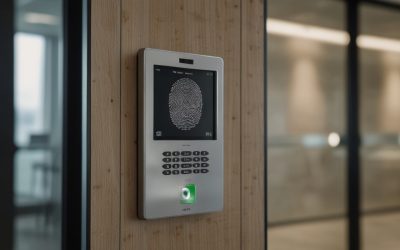
Over the next five years, access control systems are expected to undergo significant evolution driven by security demands, user experience expectations, and advancements in connectivity and computing power. As organizations continue to become more digitized, the need...
The Evolution of Visitor Management Systems Over the Last Decade
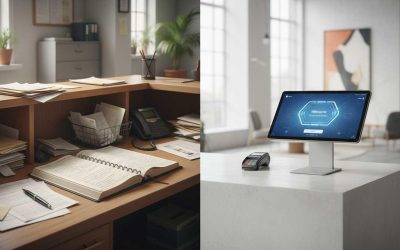
In the early 2010s, visitor management systems were primarily manual, relying on paper logbooks and handwritten entries at reception desks. Visitors would sign in, provide identification, and note their purpose of visit. While this method provided basic recordkeeping,...